

Why Your AC Struggles to Cool During Pittsburgh's July Heatwaves
When your AC runs continuously on a 95-degree day, it isn't always broken. Understand your system's mechanical limits to confidently decide if it's maxed out or genuinely needs a repair call.
Facing the Heat: When Your Air Conditioner Runs Non-Stop in Summer
Before the peak summer temperatures completely take over, understanding why your AC struggles to cool during Pittsburgh's July heatwaves becomes an urgent priority for local homeowners. Here at Supreme Heating and Cooling, our team fields countless frantic calls the moment a sudden weather shift hits and a customer's thermostat reads 78 degrees, even though it is set to a crisp 70 degrees. You might hear the condenser running continuously outside, pushing air through the vents without ever reaching that target temperature. This common scenario forces a critical decision: determining if the system is genuinely broken and requires immediate professional intervention, or if it is simply operating at its absolute maximum mechanical design capacity. The discomfort is real, and the anxiety of a potential breakdown only makes the heat feel worse.
Setting realistic expectations about your cooling system's mechanical limits can save you from unnecessary panic during the hottest weeks of the year. For foundational air conditioning services or when you genuinely need AC repair in Pittsburgh, knowing the difference between a failing unit and a maxed-out unit is incredibly valuable. A system that runs continuously on the hottest day of the year is often doing exactly what it was engineered to do, something our technicians see every July, provided it is still pulling heat and humidity out of your living space.
The 20-Degree Rule: Understanding Residential AC Design Limits
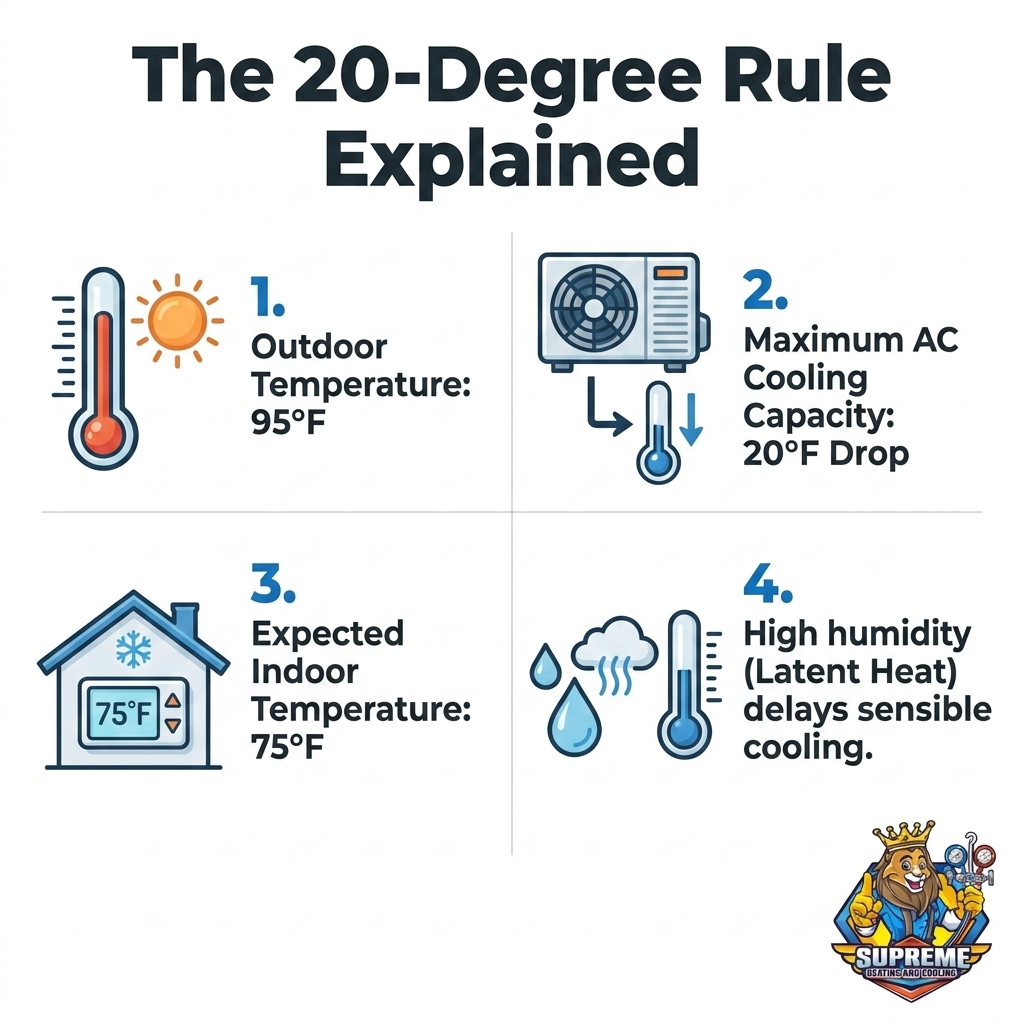
Most homeowners assume that an air conditioner can cool a house to any desired temperature, regardless of the weather outside. The reality is governed by strict mechanical engineering standards. In our experience installing and servicing regional HVAC equipment, we constantly remind customers that standard residential air conditioning systems are designed around the "20-degree rule." This industry benchmark dictates that a properly sized, fully functioning AC unit can maintain an indoor temperature approximately 20 degrees cooler than the outdoor temperature. If you are experiencing sweltering 95-degree days, an indoor temperature of 75 degrees means your system is functioning perfectly at 100% capacity.
HVAC systems are sized based on historical regional temperature averages, not the absolute hottest days of the year. Installing a massive unit capable of keeping a house at 65 degrees on a 100-degree day would result in a system that is drastically oversized for the other 95% of the summer. Oversized units cool the air too quickly and shut off before they can remove humidity, leaving the home feeling cold but uncomfortably damp. Therefore, when the outdoor temperature spikes well above the historical average, your perfectly healthy system will reach its mechanical ceiling.
Lowering the thermostat to 68 degrees during extreme heat will not make the air coming out of the vents any colder. The system only operates at one speed—on or off. Dropping the set point simply forces the compressor to run endlessly in a futile attempt to reach a temperature that physics will not allow, accelerating wear and tear without improving your comfort.
How Outdoor Temperatures Dictate Indoor Cooling
The physics of heat transfer explain why air conditioners can only move a finite amount of heat per hour. An air conditioner does not actually "create" cold air; it absorbs heat energy from inside your home and pumps it outside. The hotter it is outdoors, the harder it is for the system to release that captured heat into the surrounding air. When the outdoor air is boiling hot, the heat transfer process slows down significantly. Expecting a 65-degree living room during a severe heatwave defies the fundamental limits of thermodynamics and mechanical engineering.
River Valley Humidity: The Invisible Load on Your Cooling System
Temperature is only half of the comfort equation. In our years of keeping Western Pennsylvania homes comfortable, we've seen firsthand how humidity plays a massive, often invisible role in how your air conditioner performs. Pittsburgh's location in the Ohio River Valley creates a unique microclimate that traps high humidity during the summer months. This heavy moisture drastically increases the total cooling load on your HVAC system, forcing it to work significantly harder than a comparable system operating in a dry, arid climate.
Air conditioners are tasked with performing two distinct jobs simultaneously: cooling the air and removing airborne moisture. Before the system can effectively lower the temperature in your living room, it must first condense and drain away gallons of water from the indoor air. This process demands a massive amount of energy. When the river valley humidity spikes, your system spends the majority of its operating capacity fighting moisture rather than dropping the temperature on the thermostat.
A slightly warmer house with low humidity is still remarkably comfortable and serves as a strong indicator that your AC is doing its job effectively. If your thermostat reads 76 degrees on a brutal afternoon, but the air inside feels crisp and dry, the system is successfully managing the invisible load of humidity.
Sensible Heat vs. Latent Heat
To understand cooling performance, you must differentiate between sensible heat and latent heat. Sensible heat is the actual temperature you read on a standard thermometer. Latent heat is the heavy, moisture-laden energy that makes an 85-degree day feel like 95 degrees. Your air conditioner must process and remove latent heat first. Because the system is expending so much effort extracting water from the air, the drop in sensible temperature is naturally delayed. Recognizing this sequence helps explain why the house might take hours to cool down after a humid afternoon thunderstorm.
Continuous Operation vs. Mechanical Malfunction
One of the most frequent concerns our team hears during 95-degree days is the fear that a constantly running air conditioner is broken or actively destroying itself. Listening to the outdoor condenser hum for six hours straight can certainly cause anxiety. However, continuous operation under peak load is not inherently a sign of mechanical failure. In fact, long, steady cooling cycles actually help dehumidify the home much better than short, frequent cycles.
When an air conditioner turns on, it takes about ten to fifteen minutes for the evaporator coil to get cold enough to start pulling significant moisture out of the air. If the system were to shut off after just twenty minutes, it would barely make a dent in the indoor humidity. By running continuously during peak afternoon heat, the system maximizes its dehumidification potential. The key is distinguishing between a system that is operating at its maximum capacity and one that is genuinely struggling due to a failing component.
At Supreme Heating and Cooling, we maintain a strict commitment to honest, expert diagnostics. Transparency is our priority, which means our technicians take the time to explain to homeowners that a 75-degree indoor temperature on a scorching afternoon is actually a mechanical success, rather than using continuous operation as an excuse to push unnecessary service calls. During a recent service call, we visited a homeowner who requested a thorough check on an older system they feared was failing. Rather than pushing an immediate replacement, our technician provided a detailed diagnostic report and honest advice on the system's remaining lifespan, proving that accurate guidance always comes before a sales pitch. Peace of mind comes from understanding exactly how your equipment is designed to function.
Checklist: True Warning Signs You Need an HVAC Technician
While continuous operation is often normal during July heatwaves, there are specific symptoms that indicate your system has crossed the line from working hard to experiencing a mechanical breakdown. If you notice any of the following signs, it is time to schedule a professional evaluation with our team:
• Warm air from the supply vents: If the air blowing out of your registers feels lukewarm or room temperature, the system may have a refrigerant leak or a failed compressor.
• Ice accumulation: Ice forming on the indoor evaporator coil or the outdoor copper refrigerant lines is never normal. This usually indicates severe airflow restriction or low refrigerant levels.
• Unusual noises: Loud grinding, squealing, or metal-on-metal sounds suggest a failing blower motor or fan blade issue that requires immediate attention.
• Strange odors: Musty, burning, or acidic smells coming from the ductwork warrant investigation. If you are wondering why your AC smells like vinegar, it often points to biological growth or ozone emissions from a failing motor.
• Short-cycling: If the system turns on and off rapidly every few minutes instead of running continuously, it is failing to complete a full cooling cycle and needs diagnostic testing.
Proactive care is the best defense against sudden mid-summer breakdowns. Staying current with routine AC maintenance ensures that minor wear and tear is caught before it turns into a complete system failure. We recently helped a local homeowner who experienced a complete system shutdown during a severe summer heatwave. Because they reached out immediately upon noticing the failure, our technician was able to arrive promptly, identify the failed component, and have the system actively cooling again within thirty minutes.
When to Call for Emergency Help
There are a few scenarios where you should not wait to call for help. If the system completely loses power and will not reset at the breaker, you need a professional to check the electrical components. If the indoor temperature continues to rise well above the 20-degree differential threshold—for example, reaching 85 degrees indoors when it is 95 degrees outside—the system has lost its cooling capacity. Finally, if you detect electrical burning smells, shut the system down immediately at the thermostat and call for emergency service.
Practical Ways to Reduce the Cooling Load in Your Home
Our team often recommends several safe, effective steps homeowners across Pittsburgh can take to help their air conditioners keep up during extreme weather. Reducing the total heat load on the home allows the system to operate more efficiently without requiring any complex mechanical adjustments.
First, address radiant solar heat. The sun beating down through windows acts like a greenhouse, rapidly raising the indoor temperature. Close blinds, shades, and blackout curtains on all south- and west-facing windows during the morning and afternoon. Blocking this direct sunlight prevents a massive amount of heat from entering the living space in the first place.
Next, utilize ceiling fans correctly. Ensure your ceiling fans are rotating counterclockwise to push air straight down, creating a wind-chill effect on your skin. This breeze evaporates moisture from your body, allowing you to feel perfectly comfortable at a slightly higher thermostat setting. Because fans cool people and not rooms, always turn them off when you leave the space to save electricity.
Avoid adding unnecessary heat to the home during the hottest parts of the day. Delay using heat-generating appliances like ovens, stoves, and clothes dryers until the late evening when the outdoor temperature has dropped. Every degree of heat generated inside the home is a degree your air conditioner has to work to remove.
Finally, check your air filters. A dirty, clogged air filter acts like a wall, suffocating the blower motor and drastically reducing the amount of cold air that can circulate through the home. Replacing a restricted filter is one of the most impactful ways to restore proper airflow. From the northern suburbs down to Bethel Park, we always advise these simple load-reduction strategies to help regional systems survive the toughest summer stretches.
Expert Guidance for Extreme Summer Weather
Managing your home's comfort during severe July heatwaves comes down to understanding the science of cooling, something our technicians deal with every day. The 20-degree rule and the heavy burden of river valley humidity dictate exactly how much your system can achieve on the hottest days of the year. Recognizing that continuous operation is often just the system doing exactly what it was designed to do can provide immense peace of mind when the temperatures soar.
If your system is maintaining that 20-degree differential and keeping the indoor air dry, it is successfully weathering the storm. However, if you observe warm air, ice formation, or rapid short-cycling, do not wait for the problem to resolve itself. Schedule a thorough professional evaluation with Supreme Heating and Cooling to verify your system's health and ensure your family stays cool and comfortable for the rest of the season.
Frequently Asked Questions
Is it normal for my AC to run constantly in 95 degree weather?
Yes, continuous operation is completely normal during extreme heat. When the outdoor temperature reaches 95 degrees, your system must run non-stop just to maintain a standard 20-degree temperature differential. Long cycles also help the system pull more humidity out of the air, which improves overall indoor comfort.
What is the 20 degree rule for air conditioning?
The 20-degree rule is an industry standard stating that residential air conditioners are designed to cool a home to about 20 degrees below the outdoor temperature. If it is 95 degrees outside, a well-functioning system will maintain an indoor temperature of roughly 75 degrees. Expecting the system to cool beyond this differential puts unnecessary strain on the equipment.
Why is my AC running but not cooling the house?
If your AC is running but the house is getting warmer, you likely have a mechanical issue restricting performance. Common culprits include a severely clogged air filter, low refrigerant levels due to a leak, or a frozen evaporator coil. If the air coming from the vents feels warm, you should schedule a professional diagnostic.
How many degrees can an AC cool a house?
A properly sized residential air conditioner can typically drop the indoor temperature by 15 to 20 degrees compared to the outdoor air. Pushing the system beyond this 20-degree limit is generally not possible due to the physical limits of heat transfer. Regional HVAC systems are sized for historical averages, not extreme heat spikes.
Does high river valley humidity affect how well my AC cools?
Yes, high humidity drastically impacts cooling performance by increasing the latent heat load. The air conditioner must expend a massive amount of energy pulling moisture out of the thick river valley air before it can effectively lower the sensible temperature. This is why high-humidity days make it harder for the house to cool down quickly.
Should I turn my thermostat down lower if the house isn't cooling fast enough?
No, lowering the thermostat further will not speed up the cooling process. Air conditioners only operate at a single speed, so dropping the set point to 65 degrees on a hot day only forces the system to run endlessly without success. It is better to set the thermostat to a realistic temperature and allow the system to run steady cycles.
Other Blogs
Promotions
Take advantage of our latest promotions to save on chimney, dryer vent, and air duct cleaning—making it easier to protect your home and improve air quality at a great value.
10% off for veterans, law enforcement, and first responders


Customer Testimonials
Our customers love the noticeable difference in air quality, the professionalism of our team, and the peace of mind that comes with every thorough cleaning.


Copyright © 2025 Superior Vents. All rights reserved.
Designed & Developed by
