

How Monroeville’s Hard Water Impacts Your Whole-House Humidifier Prep
Discovering a crusty, calcified water panel during your late-summer HVAC inspection is a common local issue. Find out why mineral buildup happens and how to prep for fall.
The Hidden Late-Summer Threat to Monroeville's HVAC Systems
You open up your utility closet to get a head start on seasonal chores, expecting a quick visual inspection, but instead, you find a rigid, crusty block where your water panel used to be. Understanding exactly how Monroeville's hard water impacts your whole-house humidifier prep is the difference between starting the season with a healthy system and facing unexpected performance issues on the first freezing night. This discovery is incredibly common during the late summer / early fall transition, as homeowners begin shifting their focus from air conditioning to heating.
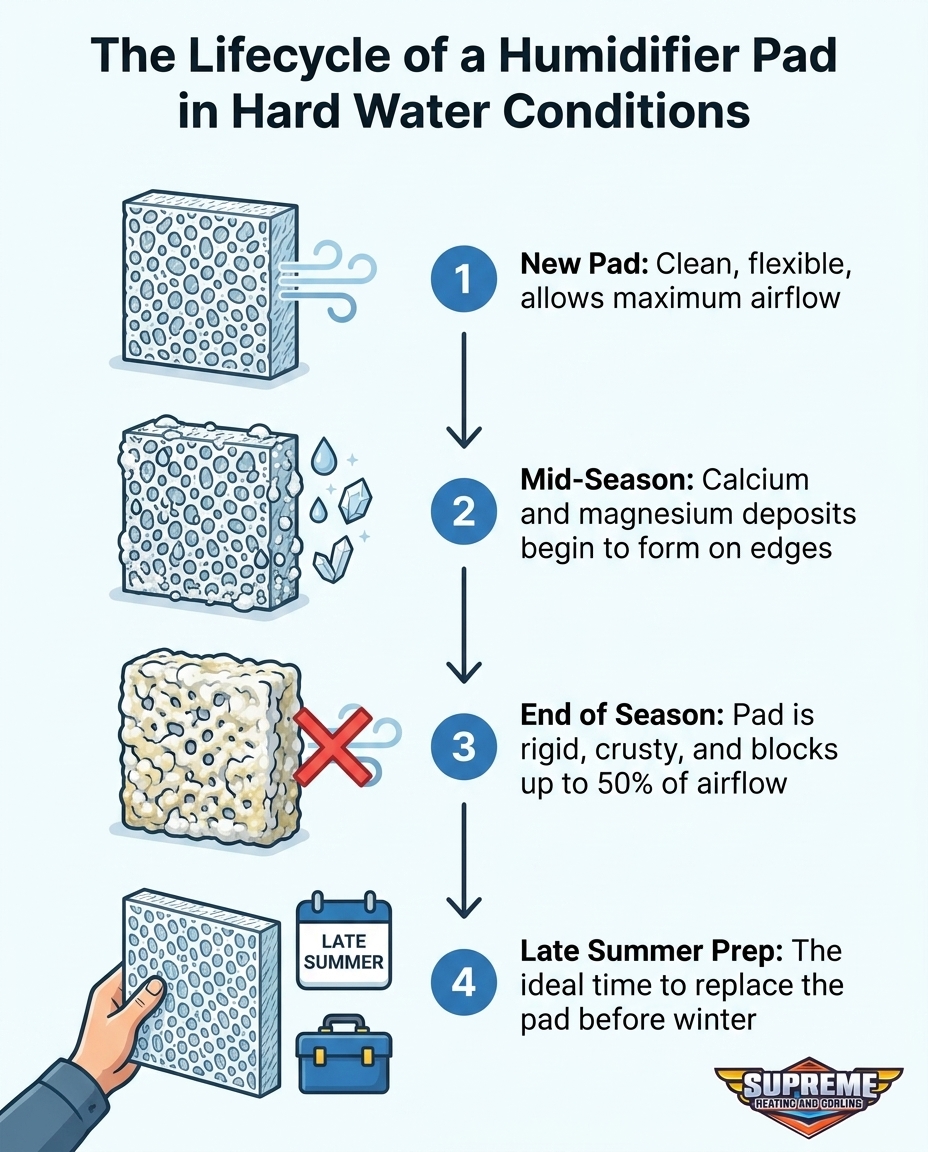
The culprit behind this chalky, calcified mess is the local water supply. When a whole-house humidifier operates, it relies on a steady flow of water over a specialized pad to introduce moisture into your home's air. However, when that water is hard, it leaves behind stubborn mineral deposits that accumulate rapidly over a single heating season. What was once a porous, flexible panel becomes a solid obstruction.
Finding a scaled-up humidifier pad presents a critical decision point for homeowners: do you attempt to reuse the old, calcified pad, or do you replace it entirely and schedule professional maintenance before the cold weather hits? Ignoring the buildup is not a viable option, as proactive indoor air quality management starts long before the furnace actually kicks on. Addressing this late-summer threat ensures that your heating system is prepared for the heavy workload ahead, preventing minor mineral scaling from evolving into a major mechanical headache.
Why Monroeville's Municipal Water Leaves Behind a Crusty Residue
To understand why your HVAC system requires specific attention in this region, you have to look at the source of the water flowing through your home. Western Pennsylvania's municipal water systems are frequently sourced from local rivers and reservoirs, which naturally contain moderate-to-high levels of dissolved minerals. As water travels through the earth and into the municipal supply for Monroeville, PA, it picks up these minerals, creating a water profile that is notoriously tough on plumbing and HVAC appliances.
The science behind the crusty residue comes down to the basic evaporation process. Inside your whole-house humidifier, a water valve opens and allows moisture to trickle down over the humidifier panel (often called a water pad). As warm air from your furnace blows across this damp panel, the water evaporates into the air stream, effectively raising the humidity levels in your home. However, only the pure water evaporates. The dissolved calcium, magnesium, and other trace minerals are left behind, clinging to the metal or paper mesh of the pad.
The compounding effect: Because the system runs continuously throughout the winter, this rapid scaling effect turns a flexible, highly porous water panel into a rigid, crusty block over just a few months. It is important to recognize that this rapid calcification is a natural consequence of local water conditions, not necessarily a defect in the humidifier itself. The equipment is doing exactly what it was designed to do, but the heavy mineral load accelerates the wear and tear on the consumable components.
The Composition of Local Hard Water
The specific makeup of the water dictates how aggressively it will scale your equipment. When calcium and magnesium concentrations are high, they interact with HVAC components much differently than soft water.
• Calcium Carbonate: The primary driver of the chalky white buildup. It adheres strongly to metal and paper surfaces, creating a barrier that prevents water absorption.
• Magnesium: Contributes to the overall hardness and works in tandem with calcium to create a dense, rock-like scale that resists basic cleaning efforts.
• Silica and Iron: While present in smaller amounts, these trace minerals can add a yellowish or brownish tint to the scale and further harden the deposits.
Because soft water lacks these heavy mineral concentrations, homeowners in areas with treated or naturally soft water can often get away with less frequent pad replacements. In Monroeville, the mineral content demands a much more rigorous maintenance schedule.
How Calcified Humidifier Pads Restrict Furnace Airflow
The problem with mineral scale extends far beyond the humidifier itself; it directly impacts the core functionality of your entire heating system. Most whole-house humidifiers are bypass systems, meaning they are mounted directly to the ductwork and rely on the furnace blower to push air through the water panel. When mineral scale physically blocks the air passages through the pad, it creates a massive point of resistance within the duct system.
This restriction places significant strain on the furnace blower motor. Instead of moving air effortlessly through a porous mesh, the motor is forced to work harder to push air through a nearly solid wall of calcification. Over time, this added resistance can cause the blower motor to overheat, draw more electrical current, and experience premature wear. If your system is clogged with dusty mineral scale, you might even notice initial burning smells when the furnace first cycles on for the season, as the strained motor and dusty heating elements heat up.
A common winter scenario: The impact of neglected maintenance often surfaces at the worst possible time. During a recent winter furnace check in the area, a system was found struggling to maintain temperature despite running constantly. A prompt response and professional assessment revealed that restricted airflow—exacerbated by a severely calcified humidifier pad—was choking the blower motor. Once the unit was properly cleaned and inspected, normal, efficient operation was fully restored.
This highlights the absolute importance of professional heating system prep. A thorough inspection ensures that all components, including auxiliary IAQ devices, are clean, unobstructed, and functioning efficiently before the heavy lifting of winter begins.
Efficiency Losses from Restricted Airflow
The relationship between airflow and energy efficiency cannot be overstated. When a clogged pad reduces overall HVAC efficiency, the entire home suffers.
• Longer run cycles: Because less warm air is making it into your living spaces, the thermostat stays unsatisfied longer, forcing the furnace to run extended cycles.
• Increased energy consumption: A strained blower motor draws more power to overcome the static pressure caused by the blocked pad.
• Uneven heating: Restricted airflow often results in cold spots throughout the house, particularly in rooms furthest from the blower.
The Direct Link Between Mineral Buildup and Indoor Air Quality
Failing to prep the humidifier during the late summer / early fall transition does more than just strain your equipment; it drastically reduces your home's winter air quality. The Environmental Protection Agency (EPA) recommends maintaining indoor relative humidity between 30 and 50 percent for optimal comfort, health, and preservation of home furnishings. Hitting that target becomes mathematically impossible if your humidifier pad is encased in stone.
A heavily calcified pad simply cannot absorb or evaporate water effectively. The water runs over the scale and straight down the drain line without ever entering the air stream. This failure leads to chronically dry indoor air, which is a major quality-of-life issue during the colder months. Dry air acts as a catalyst for a host of household problems, drawing moisture out of your skin, your hardwood floors, and your respiratory system.
Furthermore, dry air significantly exacerbates winter allergens affecting indoor air quality. When humidity drops below 30 percent, dust, dander, and airborne viruses remain suspended in the air much longer, increasing respiratory irritation and the frequency of static electricity shocks. There is also a secondary, hidden risk: old, improperly maintained pads left sitting since last winter can become breeding grounds for mold or bacteria if they remain damp in a dark ductwork environment. Starting the season with a fresh, clean panel is the only way to guarantee the air circulating through your home is both appropriately humidified and hygienic.
Why August is the Ideal Time for Whole-House Humidifier Prep
Timing is everything when it comes to HVAC maintenance. While it might feel counterintuitive to think about heating accessories while the AC is still running, the back-to-school season in August and September serves as the perfect trigger for proactive home maintenance. Catching mineral scale now prevents the HVAC system from starting its continuous winter operation at a severe disadvantage.
Pittsburgh's cold, dry winters force humidifiers to run continuously for months on end. Once the true cold settles in, your system needs to be operating at peak capacity. Waiting until November or December to check your humidifier pad usually means you are already experiencing the negative effects of dry air, and you are far more likely to get caught in the mid-winter emergency rush when local technicians are booked solid with no-heat calls.
The benefits of early preparation:
• Immediate readiness: Prepping early ensures the system is ready to perform flawlessly the moment the first unexpected cold snap arrives.
• Preventative protection: Removing the airflow restriction before the furnace begins its heavy cycles protects the blower motor from unnecessary day-one strain.
• Peace of mind: Knowing your indoor air quality strategy is fully operational allows you to transition into the colder months without worrying about sudden breakdowns or dry-air discomfort.
Evaluating Your Options: Reusing vs. Replacing Your Water Panel
When Monroeville, PA homeowners discover a crusty humidifier pad, the temptation is often to pull it out, scrub it down, and slide it back in to save time. However, reusing a heavily calcified pad is highly discouraged. The rigid scale binds so tightly to the delicate mesh of the panel that it cannot be effectively removed without permanently damaging the pad's structural integrity. Even if you manage to knock off the surface crust, the micro-pores required for proper water absorption remain permanently blocked.
The professional process goes far beyond simply swapping out a piece of mesh. When a technician services your humidifier, they replace the pad, thoroughly descale the entire humidifier housing, and carefully check the water supply line and drain tube for internal blockages. They also test the solenoid valve and the humidistat to ensure the system is communicating properly with the furnace.
We strongly warn against DIY plumbing or HVAC tampering. Whole-house humidifiers involve a delicate intersection of water lines, high-voltage furnace components, and low-voltage control wiring. Attempting to descale internal components with harsh chemicals or dismantling the water intake requires a licensed professional to ensure proper water flow and strict electrical safety. Supreme Heating and Cooling brings hyper-local knowledge of Monroeville's specific water profile, allowing us to select the exact type of humidifier pad—such as a specialized clay-coated aluminum mesh—designed to handle hard water environments and maximize residential HVAC longevity.
The Dangers of DIY Descaling
Attempting to clean a scaled system yourself carries significant risks to both the equipment and your home's air quality.
• Chemical Contamination — The Consequence: Harsh descaling chemicals should never be introduced to a system that breathes air directly into your living spaces. Residue can become airborne.
• Component Damage — The Consequence: Scrubbing or using acidic cleaners can easily crack delicate plastic float valves or damage the water distribution tray, leading to severe water leaks.
• Voided Warranties — The Consequence: Improper maintenance or the use of non-approved cleaning agents can void the manufacturer's warranty on both the humidifier and the furnace.
Relying on professional HVAC services ensures the job is done safely, effectively, and in compliance with all manufacturer specifications.
Frequently Asked Questions About Hard Water and Humidifiers
How does hard water affect whole-house humidifiers?
Hard water leaves behind dissolved minerals, primarily calcium and magnesium, as it evaporates inside the humidifier. Over time, these minerals build up into a hard, crusty scale on the water panel and internal housing. This scale restricts airflow, reduces the unit's ability to add moisture to the air, and can eventually clog water intake and drain lines if left unaddressed.
Why is my humidifier pad getting crusty?
Your humidifier pad gets crusty because the water flowing over it contains high levels of natural minerals. As the furnace blows warm air across the wet pad, the pure water evaporates into your home, but the heavy minerals remain stuck to the pad's surface. In areas like Monroeville, PA, this calcification process happens rapidly due to the local municipal water profile.
When should I prep my humidifier for winter?
The best time to prep your humidifier is during the late summer or early fall, typically around August or September. Performing maintenance before the heating season begins ensures your system is clean, unobstructed, and ready to handle the continuous demand of cold weather without putting early strain on your furnace blower motor.
Does hard water ruin whole-house humidifiers?
Hard water does not necessarily ruin the humidifier unit itself, but it does drastically accelerate the wear and tear on consumable parts like the water panel. If the scale is allowed to build up excessively without professional cleaning, it can damage the solenoid valve, clog the drain line, and cause water to back up and leak into your ductwork or furnace housing.
Can I clean a calcified humidifier pad instead of replacing it?
No, you should not attempt to clean a calcified humidifier pad. The mineral scale binds directly to the porous material, and trying to scrub or dissolve the scale will destroy the pad's ability to absorb and hold water evenly. Replacing the pad annually is the only way to ensure proper airflow and efficient moisture distribution throughout your home.
Secure Your Home's Comfort Before the Heating Season Begins
Understanding how local water conditions impact your equipment is the first critical step toward achieving better indoor air quality. By recognizing the threat that mineral scale poses to your airflow and efficiency, you can take proactive steps during the late summer / early fall transition to protect your home. Don't wait until the first freezing night to discover that your humidifier pad has turned into a rigid block of calcium.
Taking action now ensures that your system starts the season strong, providing the necessary moisture to keep your family comfortable and healthy. We highly recommend replacing those crusty pads early and scheduling a comprehensive HVAC maintenance plan to handle the prep professionally, giving you total peace of mind all winter long.
Other Blogs
Promotions
Take advantage of our latest promotions to save on chimney, dryer vent, and air duct cleaning—making it easier to protect your home and improve air quality at a great value.
10% off for veterans, law enforcement, and first responders


Customer Testimonials
Our customers love the noticeable difference in air quality, the professionalism of our team, and the peace of mind that comes with every thorough cleaning.


Copyright © 2025 Superior Vents. All rights reserved.
Designed & Developed by
