

Can I Delay My Minor AC Repair Until Next Spring?
Ignoring a small cooling issue in late summer is tempting. However, letting a compromised AC unit sit dormant all winter often causes a massive system failure by spring startup.
The Late-Summer Dilemma: Should You Fix It Now or Wait?
At Supreme Heating and Cooling, we frequently hear our Pennsylvania customers looking at their struggling cooling systems and asking: can I delay my minor AC repair until next spring? You are certainly not alone. As August and the back-to-school season roll in, the intense heat begins to break, and your cooling system doesn't have to work quite as hard. When you notice a strange new noise coming from the outdoor unit or realize the house is taking just a little bit longer to cool down, the temptation to ignore the problem is incredibly strong. After all, you only need the system to last a few more weeks before you shut it down for the winter.
This creates a common decision point for homeowners: do you invest the time and money to fix a minor issue right now, or do you simply turn off the thermostat, walk away, and deal with it when the warm weather returns next year? While waiting seems like the easiest option, mechanical damage does not pause just because the unit is turned off. In fact, ignoring a small issue now is often the direct cause of a massive, expensive failure during your first spring startup.
To keep your home comfortable and your equipment running efficiently, it is always best to rely on professional air conditioning services before you power down for the season. Addressing these seemingly minor issues before the cold weather sets in is the most effective way to protect your investment and prevent unpleasant surprises next year.
What Happens to a Compromised AC Unit During Winter Dormancy?
To understand why waiting is so risky, you have to look at the physical state of an idle air conditioner during extended winter months. When you turn off your cooling system in Pennsylvania, that outdoor unit sits completely dormant for six months or more. It faces rain, snow, ice, and fluctuating temperatures without ever cycling on to warm its internal components or circulate its protective lubricating oils.
There is a critical difference between a healthy dormant unit and one that enters winter with pre-existing damage. A healthy system is sealed, lubricated, and pressurized. It is designed to weather the off-season safely. A compromised system, however, is highly vulnerable. When an air conditioner sits idle, inactivity actually accelerates existing vulnerabilities. Chemical and environmental degradation do not require the motor to be running; they happen silently while the system is powered down.
Healthy vs. Compromised Winter Dormancy
• Refrigerant Lines — Healthy Dormant State: Fully sealed and pressurized, protecting internal components. — Compromised Dormant State: Micro-leaks allow pressure to drop and outside air to enter the lines.
• Fan Motor Bearings — Healthy Dormant State: Coated in clean oil, resisting rust and oxidation. — Compromised Dormant State: Friction-worn bearings sit unlubricated, inviting severe rust over six months.
• Compressor Oil — Healthy Dormant State: Remains stable and ready to lubricate upon spring startup. — Compromised Dormant State: Mixes with invading moisture to form highly corrosive acids.
Turning off the thermostat at the wall does absolutely nothing to stop these chemical reactions or environmental impacts. This is why recognizing end-of-season AC wear is so important. What looks like a system safely "resting" is often a system slowly degrading beyond the point of a simple repair.
Freeze-Thaw Cycles: The Enemy of Minor Refrigerant Leaks
The Problem: You notice that your system is cooling a little slower than usual in August or late summer. A technician might find a slow refrigerant leak. Because the leak is tiny, you might think you can just leave it alone until next year.
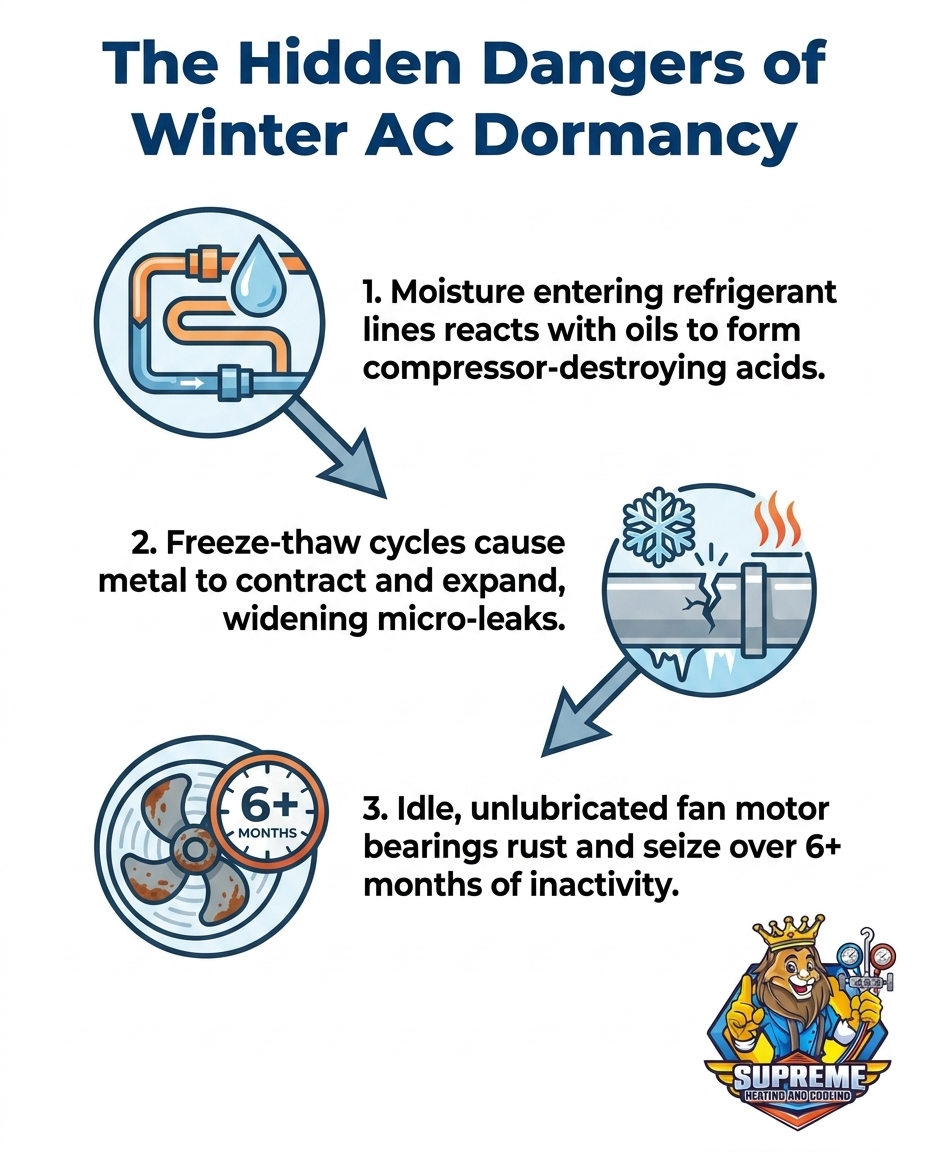
The Cause: In our years of servicing the Pittsburgh area, our team has seen exactly what Pennsylvania's frequent freeze-thaw cycles can do to an air conditioner. Throughout the winter, temperatures plunge below freezing at night and warm up during the day. This constant shifting causes the metal components of your outdoor condenser unit to repeatedly contract and expand. When metal with a tiny micro-leak contracts and expands dozens of times over a long winter, that tiny hole physically stretches and widens. A slow, seemingly manageable leak in late summer will often result in a completely empty, depressurized system by the time spring arrives.
The Solution: Fixing the leak before the freeze-thaw cycles begin is the only way to protect the system. When refrigerant lines sit empty, they create a vacuum that pulls in outside ambient moisture. This is a severe risk. When moisture enters the lines and mixes with the specialized oils inside your compressor, it creates a highly corrosive acid. This acid eats away at the internal windings of the compressor, turning a minor leak repair into a total system replacement.
Mechanical Seizing: Why Minor Noises Turn Into Major Failures
Another common late-season issue our technicians encounter is a strange noise coming from the outdoor unit. Because the system is still technically producing cold air, we often see homeowners in Pennsylvania ignore these sounds, assuming they can just deal with the noisy fan next year. However, these noises are mechanical cries for help.
• Rattling: Often indicates loose hardware, failing mounts, or a fan blade that is slightly out of balance.
• Grinding: Usually points directly to metal-on-metal friction, meaning the protective lubrication has failed.
• Squealing: Frequently a sign of failing bearings inside the condenser fan motor.
These noises almost always indicate unlubricated or failing bearings. When your system is running every day, the sheer force of the motor keeps those failing bearings spinning, even if they are grinding. But what happens when you turn that motor off for six months?
Those idle, compromised bearings are highly susceptible to oxidation and rust over the winter. Without the daily movement to keep them loose, and without the protective coating of oil, the moisture in the winter air causes the metal components to fuse together. A fan that rattled slightly before winter can completely seize up. When you go to turn your AC on for the first hot day of spring, the system sends electricity to the motor, but the rusted bearings refuse to spin. The electrical current has nowhere to go, causing the motor to overheat and completely burn out within minutes.
Getting an Honest Diagnostic: Urgency vs. Monitoring
The most stressful part of discovering an AC issue in August or late summer is the uncertainty. You don't want to pay for an unnecessary repair, but you also don't want to ruin your equipment. This is where getting a technical, diagnostic-first approach becomes critical. Guessing whether a noise is "safe" or a leak is "slow enough" is a massive gamble with your home's most expensive appliance.
A professional uses specialized tools to assess the severity of end-of-summer wear. They measure exact refrigerant pressures, test the electrical amp draw of your motors, and check the integrity of your capacitors. This data allows them to make an informed recommendation. Supreme Heating and Cooling provides honest, expert diagnostics to help homeowners determine if a repair is truly urgent or if it can safely wait, preventing costly surprises in the spring.
Recently, our team at Supreme Heating and Cooling helped a local homeowner facing a cooling issue right as the late-summer season was shifting. Rather than waiting it out and risking a total breakdown, one of our expert technicians performed a full diagnostic. We recommended a targeted solution, installed the necessary components neatly and professionally, and permanently resolved the issue before the cold weather hit. This illustrates the peace of mind that comes from knowing exactly what the issue is before shutting the unit down. Our experts can provide a targeted solution that prevents a minor, inexpensive issue from snowballing into a major crisis.
If you are unsure about the noises or performance of your system, scheduling AC repair in Pittsburgh for a professional diagnostic is the safest move you can make.
Proactive End-of-Season Care for Your Cooling System
If you choose to maintain your system now rather than crossing your fingers until spring, you are setting yourself up for long-term success. Addressing repairs alongside end-of-season tune-ups provides massive long-term benefits, including better energy efficiency, fewer breakdowns, and a significantly longer lifespan for your equipment.
Based on what we see in the field every year, establishing a long-term care strategy in Pennsylvania ensures you avoid spring surprises. Here is what our proactive end-of-season care looks like:
• Verify system performance: Have a technician measure the cooling output and electrical draw to ensure no hidden issues are lurking before shutdown.
• Address minor repairs immediately: Fix slow leaks, replace worn contactors, and lubricate noisy bearings so the system enters dormancy in a healthy state.
• Clear organic debris: Remove leaves, twigs, and dirt from inside and around the outdoor condenser unit to prevent moisture retention and rust during the winter.
• Schedule your maintenance: Combine your late-season repairs with routine AC maintenance to ensure the entire system is cleaned, calibrated, and ready to rest safely.
• Secure the outdoor unit: Once repairs are verified, ensure the unit is powered down at the thermostat to prevent accidental cycling during unseasonably warm winter days.
Frequently Asked Questions About End-of-Season AC Repairs
What happens if I leave my AC broken over winter?
If you leave your AC broken over the winter, the existing mechanical damage accelerates rapidly due to inactivity. Unlubricated parts rust, and open leaks allow moisture intrusion that causes internal corrosion. As a result, attempting a spring startup often results in total failure, turning what would have been a minor fix into a major component replacement.
Can an AC refrigerant leak get worse when turned off?
Yes, a refrigerant leak can get significantly worse even when the system is turned off, largely due to metal contraction. Winter freeze-thaw cycles cause the copper lines to expand and contract, which physically widens micro-leaks. Once all the refrigerant escapes, the empty lines invite destructive moisture into the system, which destroys the compressor.
Is it bad to leave an AC making noise until next year?
Yes, because late-season noises almost always indicate mechanical friction and failing lubrication. When you turn the system off for months, those idle bearings rust and seize together. When you attempt to run the system next year, the motor will likely burn out when it is forced to try and start seized bearings.
Should I repair my AC in the fall or wait until spring?
Our team always recommends repairing your AC in the fall to prevent compounded damage caused by winter dormancy. Fixing it now ensures the system is ready for unexpected early heat waves next year. Furthermore, fall repairs help you avoid the massive spring rush, ensuring you won't be stuck waiting days or weeks for an available HVAC technician when the heat returns.
How do I know if my AC issue is minor or major?
Determining the severity of an AC issue requires professional diagnostic tools; it is not something you can guess by listening to the unit. A technician must test refrigerant pressures, measure electrical amp draws, and inspect internal components. Visual inspections alone cannot detect the internal component wear that separates a minor tune-up from a major failure risk.
Make the Right Call for Your AC Before Winter Arrives
A clear, technical understanding of winter dormancy proves exactly why waiting to fix your cooling system is so risky. The damage does not pause just because the thermostat is turned off. In Pennsylvania, the freezing temperatures, moisture, and long months of inactivity will turn minor friction into seized motors and tiny leaks into empty, acid-filled lines.
As your local HVAC experts, we know firsthand that proactive diagnostics save you money, protect your equipment, and eliminate the stress of wondering if your system will turn on next year. Don't let a small August issue become a massive spring headache. Secure your peace of mind by addressing those lingering concerns today, and consider enrolling in a preventative maintenance plan to ensure your equipment is always evaluated before the seasons change. Make the right call now, and you'll enjoy a clear, technical, and stress-free transition into winter.
Other Blogs
Promotions
Take advantage of our latest promotions to save on chimney, dryer vent, and air duct cleaning—making it easier to protect your home and improve air quality at a great value.
10% off for veterans, law enforcement, and first responders

Customer Testimonials
Our customers love the noticeable difference in air quality, the professionalism of our team, and the peace of mind that comes with every thorough cleaning.


Copyright © 2025 Superior Vents. All rights reserved.
Designed & Developed by
